

Almost everyone knows what a mortgage broker does. Instead of walking into one bank and taking whatever it offers, you use a broker who shops dozens of lenders, finds the sharpest deal, and does the legwork for you. What almost nobody realises is that the exact same role exists for builders. It's called a builder broker, and for anyone doing a new build it can be the most valuable person in the room.
A big part of what we do at BrixFolio is act as that broker. Not for loans, for builders and developers. When we go looking for the right build, we don't just scroll the same listings and display homes everyone else can see. We go behind closed doors, into a network of builders most people never reach, and we match you with the right team for your exact job. Let me explain how it works, and why it pays to have one in your corner.
What a builder broker actually does
A builder broker (sometimes called a building broker) is a person or business that arranges and compares quotes from builders on your behalf. That's the textbook definition, and it can cover residential, commercial or industrial work. In plain English, we sit on your side of the table and put your project out to the builders who are genuinely right for it.
The comparison to a mortgage broker isn't loose. It's almost exact. A mortgage broker knows which lenders suit which borrowers, so you aren't left guessing. We know which builders suit which projects, so you aren't left cold calling display villages hoping the salesperson in front of you happens to be the right fit. We do the research. You get the choice.
You wouldn't walk into one bank and sign for a home loan without comparing. Yet most people building a home do exactly that with builders. They pick the one with the nicest display home and hope for the best.
Here's the catch: not all builders are the same
This is the part that surprises people, and it's the whole reason a builder broker earns their keep. Builders aren't interchangeable. They specialise, often heavily, and the knowledge that makes one builder brilliant at their thing doesn't carry across to the next thing at all.
A builder who is outstanding at standard family homes may have never navigated a subdivision. A duplex and dual occupancy specialist lives and breathes strata plans and two titles from one block. A rooming house or co-living builder works to a completely different rulebook again. Different disciplines, different approvals, different expertise.
Duplex & dual occupancy
Understands subdivision, strata plans and turning one block into two separate titles. A niche most volume builders never touch.
Rooming houses & co-living
Built to Class 1b standards, with specific fire separation, exit and ventilation rules a general builder rarely deals with.
NDIS & SDA housing
Specialist Disability Accommodation carries strict design categories and certification. A field of its own again.
Family homes & knockdown rebuilds
Volume and custom home builders excel here, but that skill doesn't automatically transfer to the niches above.
Here's a real example of why this matters, not in theory but in dollars. A general residential builder who doesn't understand Class 1b can complete an entire rooming house that looks finished, and then fail to get an occupation permit over things like fire separation, exit signs or ensuite ventilation. You're left holding a building you can't legally rent. A specialist who builds nothing else would never have made those calls. That's the difference between the right builder and merely a good one.
The best builds are never advertised
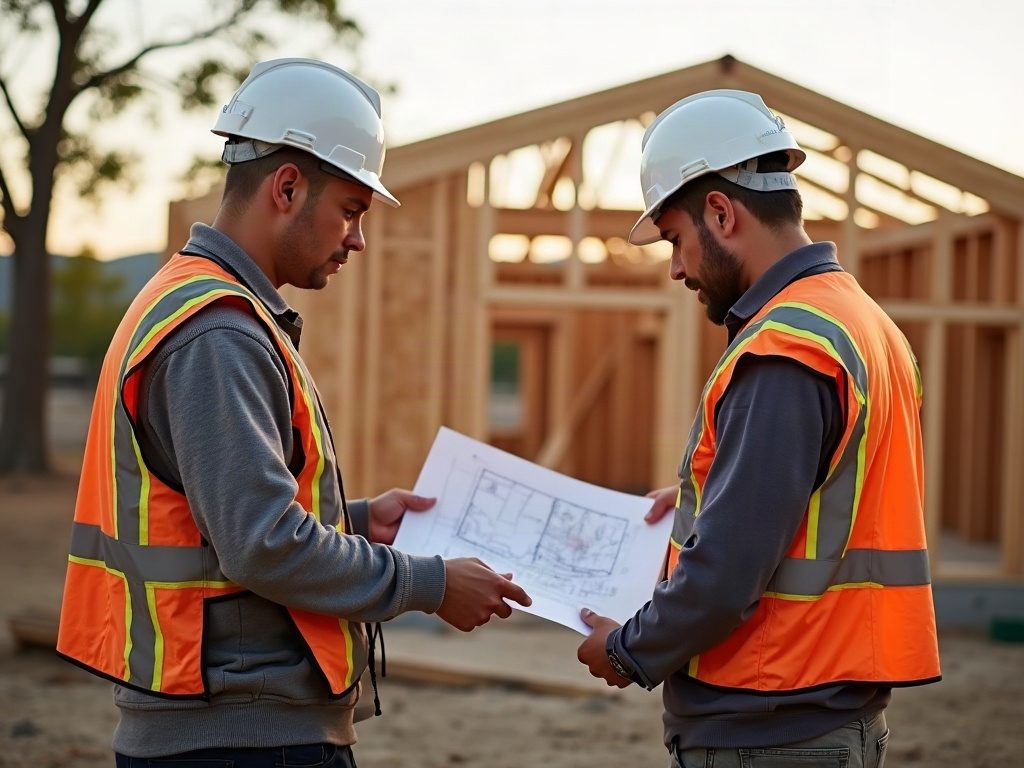
When most people look for a new build, they see the front window. Display homes, house and land packages, whatever is being marketed this month. That's a thin slice of what is actually out there, and it's the slice that spends the most on advertising, not necessarily the slice that suits your project or your budget.
Our job is to work the other side of that window. We deal directly with builders and developers, including specialists who don't run display villages or ad campaigns at all because their pipeline comes through referral. Going behind closed doors is where the right fit, and often the better value, actually lives.
How it works, start to finish
The process is simple on your side, because we carry the weight of it. It comes down to three steps.
Tell us the goal and location
What you want to build and where. The project type and the site decide which builders are even worth asking.
We shop the right specialists
We take it to our network, including builders you won't find advertised, and gather comparable, fixed price quotes.
You choose from the best
We come back with options, explain the trade offs, and you pick the right team with the numbers in front of you.
Notice what you aren't doing in that process. You aren't ringing around chasing quotes, not comparing a fixed price against a vague one, not trying to work out on your own whether a builder has ever done a project like yours. We do that. You make the final call with clear options in front of you.
So what does it cost you?
This is where a lot of people expect the sting, and there usually isn't one. For most clients, a builder broker costs nothing directly. The fee is paid by the builder you choose, out of the same sales and marketing budget they would otherwise spend on an in house salesperson.
Industry building broker guides put that builder fee at roughly 3 to 5 percent of the wholesale build price. Because it's already baked into the builder's cost of sale, your home generally costs the same, and sometimes less, than if you had walked in the front door and dealt with them direct. A reputable broker will always tell you plainly how they're paid, so it's a fair question to ask up front.
Why this keeps us honest
Here's the part that matters most, and it's the reason the model works in your favour. A fee is payable to us whichever builder you go with. That's the point. It means we have no reason to steer you toward one builder over another for our own benefit, because our position doesn't change based on your choice.
So we're free to do the one thing that actually helps you. Put you in front of the right team for the right job. Not the one with the flashiest display home, not the one paying the biggest bonus, the one that genuinely fits your project. When the incentive is the same across the board, the only thing left to compete on is fit. That's exactly how it should be.
A mortgage broker gets you the right loan. A builder broker gets you the right builder. In both cases, the person who shops the whole market for you is worth having on your side.
Where people go wrong with new builds
A new build can be one of the best moves you make. It can also be where people get stung, because the real traps aren't in the display home, they're in the fine print. Here are the ones we see most, and how having a broker in your corner takes each one off the table.
Bait advertising
That headline price is often a stripped-back shell, designed to get you talking to their sales team. By the time you tick every box you actually need for a real fixed price, it can land $100k above the ad.
Broker fix: we compare true, like-for-like fixed prices, so the real number is in front of you before you fall for the sticker.
No finance clause
Sign without a "subject to finance" clause and, if the bank says no, you can lose your deposit or be pushed to complete a build you can't fund.
Broker fix: we make sure your contract protects you if finance falls through, before you sign anything.
No fixed price contract
A "cost plus" or open-ended contract lets the price drift upward the whole way through the build. You never really know your final number.
Broker fix: we push for a genuine fixed price contract, so the number you sign is the number you pay.
Skimming the inclusions list
Two quotes can look almost identical and be $50k apart once you see what one quietly leaves out: driveway, landscaping, floor coverings, site costs, the lot.
Broker fix: we lay the inclusions side by side so you're comparing apples to apples, not headlines.
Site cost and rock clauses
Contracts often carry "provisional" site allowances, and a rock or bad-soil clause can add tens of thousands the moment they start digging.
Broker fix: we flag these clauses up front and push for realistic site allowances, so a bad dig doesn't blow your budget.
No timeline or penalties
Without a clear build time and liquidated damages for delays, a build can drag on for months with no real consequence to the builder.
Broker fix: we check the build timeline and delay penalties are actually written in, so the builder has skin in the game.
Not understanding the contract
HIA, Master Builders and custom contracts all carry different terms, progress payments and rights. Most people just sign the one put in front of them.
Broker fix: we know the differences and make sure the terms suit you, not only the builder.
Wrong builder for the job
Expecting an investment-grade price from a custom builder, or a custom home from a volume investment builder. Both end in a blown budget or a disappointing result.
Broker fix: matching the project to the right type of builder is literally our job. Right team, right job.
Every one of those is avoidable. Not by being an expert yourself, but by having someone who reads these contracts for a living sitting on your side of the table.
Why it pays to have an experienced builder broker in your corner
Anyone can pass on a phone number. Experience is what turns a broker from an introduction service into genuine protection for your project. Here's where that experience actually shows up.
The right specialist
We match your project to a builder who does that exact thing, so you avoid the costly mistakes a generalist can make on a niche build.
Right team, right jobComparable quotes
Multiple fixed price quotes, laid out apples to apples, so you can actually compare inclusions instead of guessing what is missing.
No hidden gapsTime and stress saved
We carry the chasing, comparing and back and forth. You get clear options and keep your evenings, without doing a second job.
We do the legworkWhy this matters right now
Two things make the builder broker role more valuable than ever. Australia is short of new housing and the shortfall is widening, which keeps quality builders busy and their calendars full. And from 1 July 2027, negative gearing changes so that established property loses the concession while new builds keep it, which is pointing serious investor money straight at new construction.
More people building, more demand for the good builders, and higher stakes on getting the match right. When the market is moving toward new builds, the person who can open the right doors and compare the field for you isn't a nice to have. They're the edge.
You don't have to be a developer to build like one. You just need the right team for the right job, and someone in your corner whose only interest is finding it. That's what a builder broker is for.
Skip the display home sales pitch. Compare the field. Then decide.
Common questions
What is a builder broker?
How much does a building broker cost?
Who pays the builder broker, me or the builder?
Why do different builders specialise in different things?
Do I still get to choose the builder?
What are the most common mistakes people make with a new build?
Sources
- Wikipedia, "Builder broker" (definition, residential, commercial and industrial specialisation)
- Building broker industry guides, 2026 (builder-paid commission of roughly 3 to 5 percent of the wholesale build price, in place of internal sales commission)
- Rooming House and Class 1b builder guidance, 2026 (fire separation, exit and ventilation standards, and occupation permit risk with a non-specialist builder)
- Dual occupancy and specialist builder profiles, 2026 (Metricon dual occupancy experience since 2006, specialist rooming house, co-living, NDIS and SDA builders)
- National Housing Supply and Affordability Council, State of the Housing System 2025 (new dwelling shortfall)
- Australian Treasury, Budget 2026-27 tax reform fact sheet (negative gearing and new builds from 1 July 2027)